North Carolina Is Facing a Massive Methane Gas Build-Out, Davidson and Davie Counties Are Feeling the Pressure
North Carolina is undergoing an extensive methane gas build-out across the region. Davidson and Davie Counties are two of many counties feeling the pressure of growing proposals for new methane gas infrastructure.
Davidson and Davie Counties are at a pivotal moment, facing the rapid expansion of methane gas infrastructure that could reshape the region for decades to come. From the Southeast Supply Enhancement Project in Davidson County, a high-pressure methane gas pipeline set to run beside residential neighborhoods, schools, sensitive waterways, and churches, to the potential plans for large gas-fired power plants and a liquified natural gas facility in the heart of rural land along the Yadkin River, and risks of data center development in both counties.
But what exactly is happening, and what’s really at risk?
⭐Want to join the Protect DavCo email list?⭐
Receive project updates as we learn more, community meeting announcements, action alerts, and more!
Join the email list by filling out this google form with your preferred contact information.
Sign the petition❗
Protect Davidson and Davie Counties: Resist the Gas-Fired Power Plants
Tell local and state level decision makers to protect the region and resist the gas power-plants!
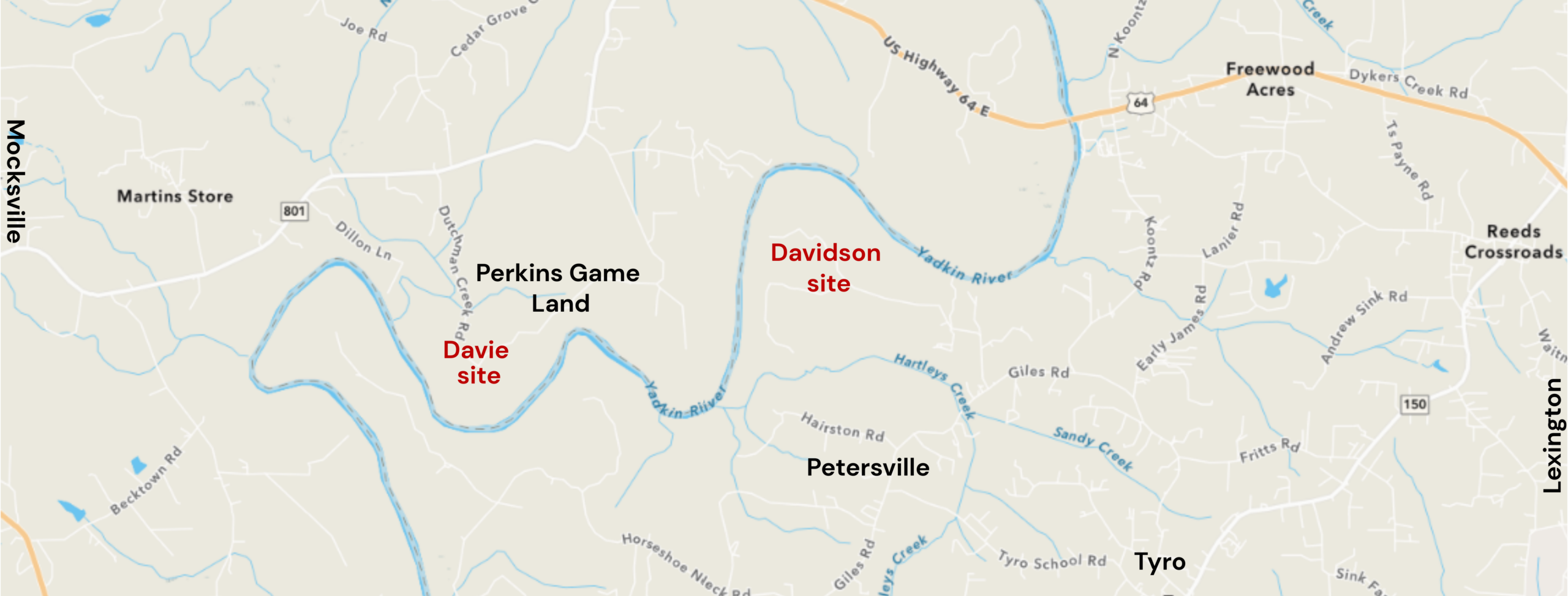
In Davie County, Duke Energy owns a roughly 1,600 acre tract of land. Located within Perkins Game Land, this area is being considered for the two massive methane gas power plants.
Across the river in Davidson County, Duke owns a similar sized tract of land. This where they want to build the largest Liquified Natural Gas facility in company history.
What Are the Concerns?
Increased Air Pollution and Health Impacts
Methane gas power plants emit high levels of health compromising air pollutants, including, nitrogen oxides (NOx), volatile organic compounds (VOCs), and fine particulate matter. Exposure to high concentrations of these pollutants can cause of worsen:
- Asthma
- Respiratory infections
- Heart damage
- Shortness of breath
Fine particulate matter (PM2.5) is emitted when methane gas is combusted (such is done at power plants), and secondary PM 2.5 is formed from NOx emissions. Fine particulate matter is smaller that the openings in the lungs, and long-term exposure causes damage through the entire body, including:
- Increased risks of Alzheimer’s and Parkinson’s
- Kidney Disease
- Cardiovascular disease
- Premature birth and miscarriage
Davidson County Already Ranks in the 80th and 90th Percentile for Toxic Air Pollutants
The fine particulate matter (PM2.5) monitor on the Lexington Water Tower, about 8 miles from the Giles Road site, had a 2022-2024 design value of 8.8 micrograms per cubic meter, just shy of the primary annual PM2.5 Nation Ambient Air Quality Standard of 9.0 micrograms per cubic meter.
Facing increased PM2.5 emissions from the expansion of Transco Compressor Station 155, as part of the Southeast Supply Enhancement Project (a high-pressure methane gas pipeline), and predicted emissions from the Duke Energy gas fired power plants and ELNG facility, Davidson County will almost certainly fall into violation for PM2.5 pollution. But what does this mean?
- The burden on residents and school students health will significantly increase around the nearby site and throughout the county
- Stunt county economic development, preventing how industry can operate in the county moving forward
Various studies show that PM2.5 is a major risk factor for respiratory and cardiovascular conditions, contributing to premature death and morbidity. In a county that already faces high levels of PM2.5 emissions, new energy infrastructure that will drastically increase these emissions should NOT be allowed.
More Air Pollution Could Stunt Future Economic Development
If the air pollution from these new gas plants pushes the area over air quality limits, it could prevent new industries that could bring more jobs than the gas plants from coming.
On average, depending on the size, one gas-fired power plant would likely only employ between 30-60 people, and something like a factory could bring 50-500 jobs.
County leaders should consider how much tax revenue and how many local jobs, such as those in advanced manufacturing, would be lost if hosting the Duke Energy gas plants throws the county into non-attainment for air quality.
Residents Could See an Increase in Utility Bills
Recent state law, Senate Bill 266, allows Duke Energy to charge customers for gas plants before they’ve even been built. Ratepayer bills would increase to pay for this infrastructure and the fuel to run them, while Duke Energy would see a guaranteed profit. A dependence on methane gas infrastructure further exposes ratepayers to the unpredictability of fossil fuels and hinders North Carolina’s ability to transition to more affordable and stable renewable energies.
- Rising methane gas prices accounted for more than 67% of residential rate increases in parts of Duke Energy’s NC service area
- This would also impact customers of electric cooperatives, like Energy United
Utilities are overestimating electricity demands to account for data centers and other large projects that might not materialize. The inflated energy demand estimate in NC is part of a national trend of rapidly escalating energy demand, largely attributed to the growth of data centers.
Impacts to Water Quality
Methane gas power plants can require large amounts of water for cooling systems. This water is often pulled from local water resources, which can put a strain on local water supply, disrupting the cycle of clean drinking water in the county.
If Duke Energy uses air-cooled technology, as the utility is proposing for the 3rd gas plant in this system (located in South Carolina), then one of these gas plants alone could require 600,000 gallons per day of water withdrawal from the Yadkin River for cooling. 400,000 gallons might be discharged, with a net loss of 200,000 gallons per day from the Yadkin River basin. If Duke uses traditional wet-cooling technology, the amount of water required could be ten times more.
- It is important to note that the discharged water will be different from the raw water that is pulled from the Yadkin. This discharge will be warmer and less biologically diverse.
- Known as “thermal pollution” when warmer water is discharged, water temperatures increase and dissolved oxygen levels are depleted, resulting in harm to the waterbody and aquatic ecosystem. Thermal pollution makes a more hospitable environment for harmful algal blooms.
- The discharge may contain other contaminants like heavy metals, chlorine, and antifoulant chemicals (used to prevent corrosion and mineral deposits on the machinery).
- The nitrogen oxides emitted into the atmosphere could result in nitrogen deposition in nearby waterways. Nutrients like nitrogen contribute to the proliferation of harmful algal blooms.
Our state is experiencing a significant loss of agricultural land and an increase in development. Agricultural land and forests can allow for filtration of runoff and infiltration of rain into the soil and groundwater supply. These power plants would result in the destruction of farmland and forest and create an increase of impervious surfaces. Development could result in the sedimentation of the Yadkin River and increase contaminant-containing stormwater runoff.
Concerns for the Yadkin River
The Yadkin River already faces many threats to water quality upstream and downstream of this proposed site:
- Stormwater runoff from the populated city of Winston-Salem and Forsyth County carries water containing fecal bacteria, sediment, and nutrients from development sites and impervious surfaces to the Yadkin River, a major drinking water source.
- Agricultural runoff in the Upper Yadkin River watershed also transports nutrients, sediment, bacteria, and heavy metals downstream making the Yadkin River vulnerable to further contamination.
- Although Davidson County’s intake is just upstream of the proposed site, Rowan County’s intake is located downstream at the confluence of the Yadkin River and South Yadkin River.
The Yadkin River in this part of Davidson and Davie Counties still feels mostly wild with forested buffers and farmland. This stretch of the river is part of the Yadkin River State Trail (163-mile paddle trail) and the Daniel Boone Heritage Canoe Trail, which is a 22-mile paddle trail with 10 significant historical markers along the river including Boone’s Cave and fish weirs created by indigenous peoples.
Both of these regional trails provide important recreational and economic value to the communities, fishermen, and paddlers along it. A power plant will disrupt the historical and environmental importance of the Yadkin River through Davidson and Davie.
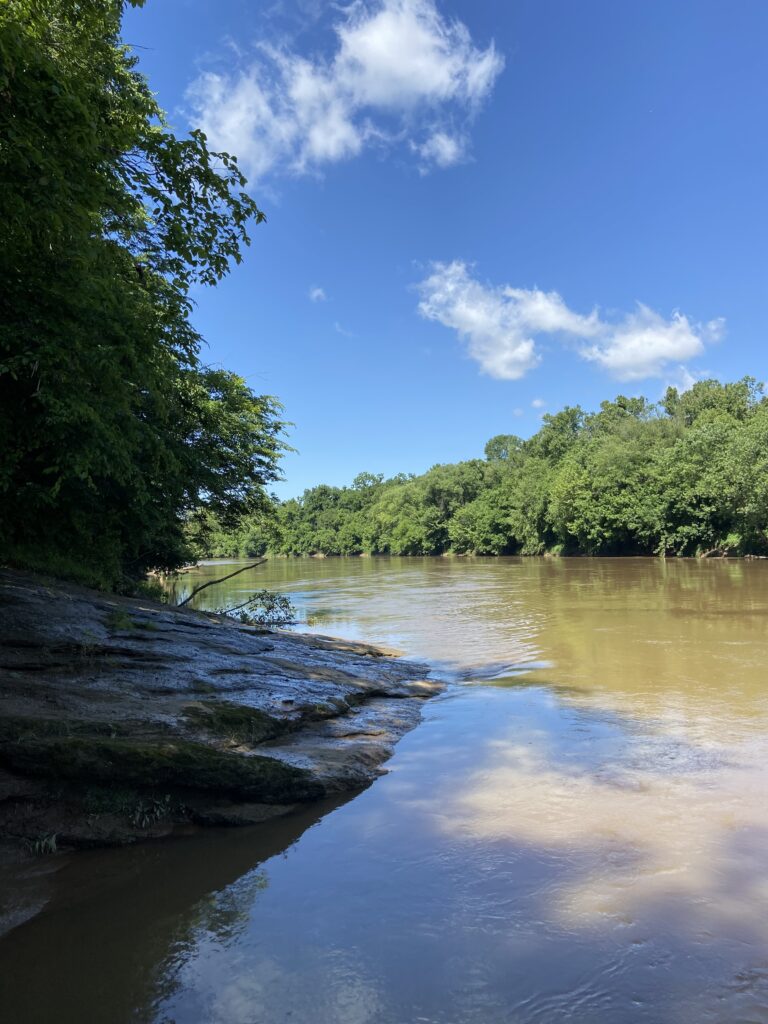
These plants threaten what is loved about the regions rural identity. Residents deserve well-planned growth that still maintains the feel of small-town living.
What can you do?
Spread the Word!
Spreading awareness about these proposed gas plants is a crucial step towards building strong local opposition to fight them. There are multiple ways you can get involved to spread awareness, such as:
- Outreach to groups – contact local parent-teacher organizations, farmers, businesses, churches and other faith communities, volunteer groups, etc.
- Social media/publicity – share articles and posts on social media to inform people about the project
- Door-knocking – talk to your neighbors to inform them about the project
- Attend local events to hand out flyers or have a table to talk to attendees
- Send a letter to local and state newspapers sharing your concerns and
encouraging them to write about this issue - Connect with your community– talk to your friends and family, local groups, and networks, explain why you’re concerned and what can be done to protect your community
Join the Protect DavCo email list!
Receive project updates as we learn more, community meeting announcements, action alerts, and more!
Join the email list by filling out this google form with your preferred contact information.
Outreach Materials and Resources to Learn More
- General outreach flyer– a printable flyer, with base information. perfect to share at events and community hubs
- Info handout– a printable handout with more detailed information
- Talking points and information guide– impacts, concerns, and resources to learn more about methane gas power plants
Residents gathering at a community meeting to learn more and get involved!
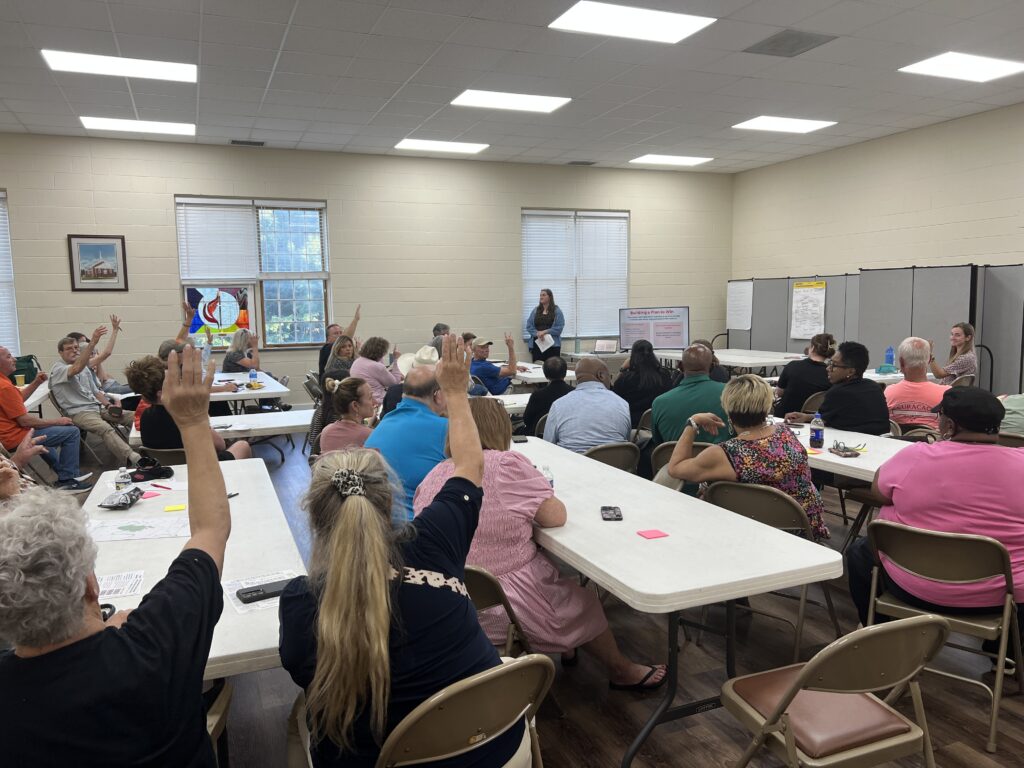
Tell Davidson and Davie County Commissioners- Protect the Region, Resist the Gas Plants!
Getting elected officials on board to oppose the gas plants will increase our chances of defeating these projects and protecting the community from there dangerous impacts.
You have the chance to share all your concerns with the commissioners. Increased air and water pollution, public health concerns, property value impacts, higher electric bills, fewer jobs- you can share it all with them. Make sure they hear your voice, as it is essential in protecting the community!
Davidson County Board of Commissioners Meetings
- 2nd and 4th Monday of the month- 6pm
- Davidson County Governmental Center- 913 Greensboro Street, 4th Floor, Lexington NC
Davie County Board of Commissioner Meetings
- 1st Monday of every month- 6pm
- Davie County Administration Building- 123 South Main Street, Mocksville NC 27028
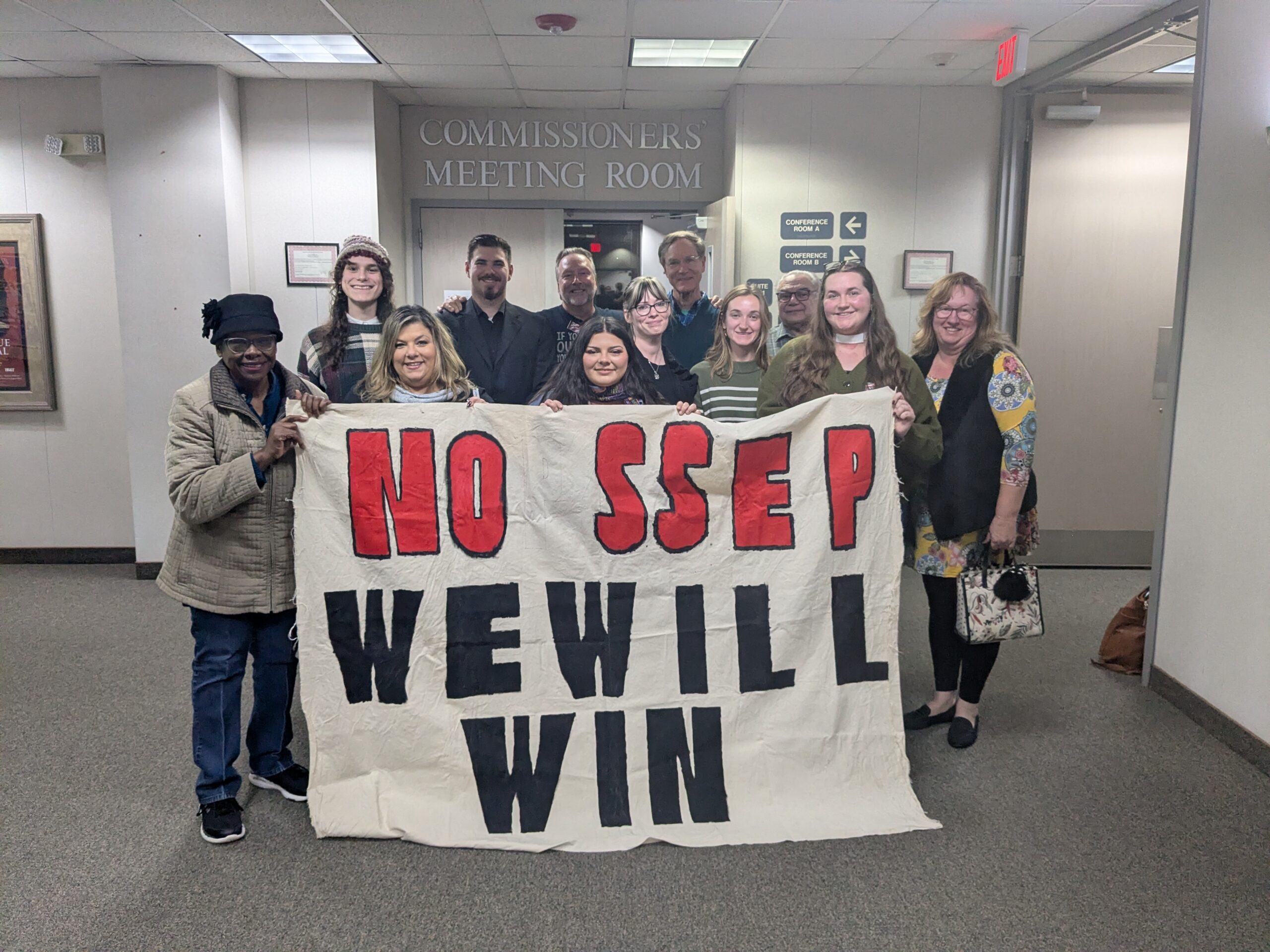
Davidson Co. Commissioners Sided with Residents Against SSEP
In December 2025, Davidson County Board of Commissioners passed a resolution urging the Federal Energy Regulatory Commission and the NC Department of Environmental Quality to deny approval of Southeast Supply Enhancement Project (high pressure methane gas pipeline) until they:
- Fully consider Davidson County residents’ concerns
- Thoroughly evaluate all potential risks and alternatives in a comprehensive Environmental Assessment
- Require Transco to submit notification plans in the case of an incident.
They spoke out against one massive methane gas energy project- Let’s ensure that they speak out against the gas plants as well! Use your voice and tell them to protect community wellbeing over unnecessary and dangerous fossil fuel projects.